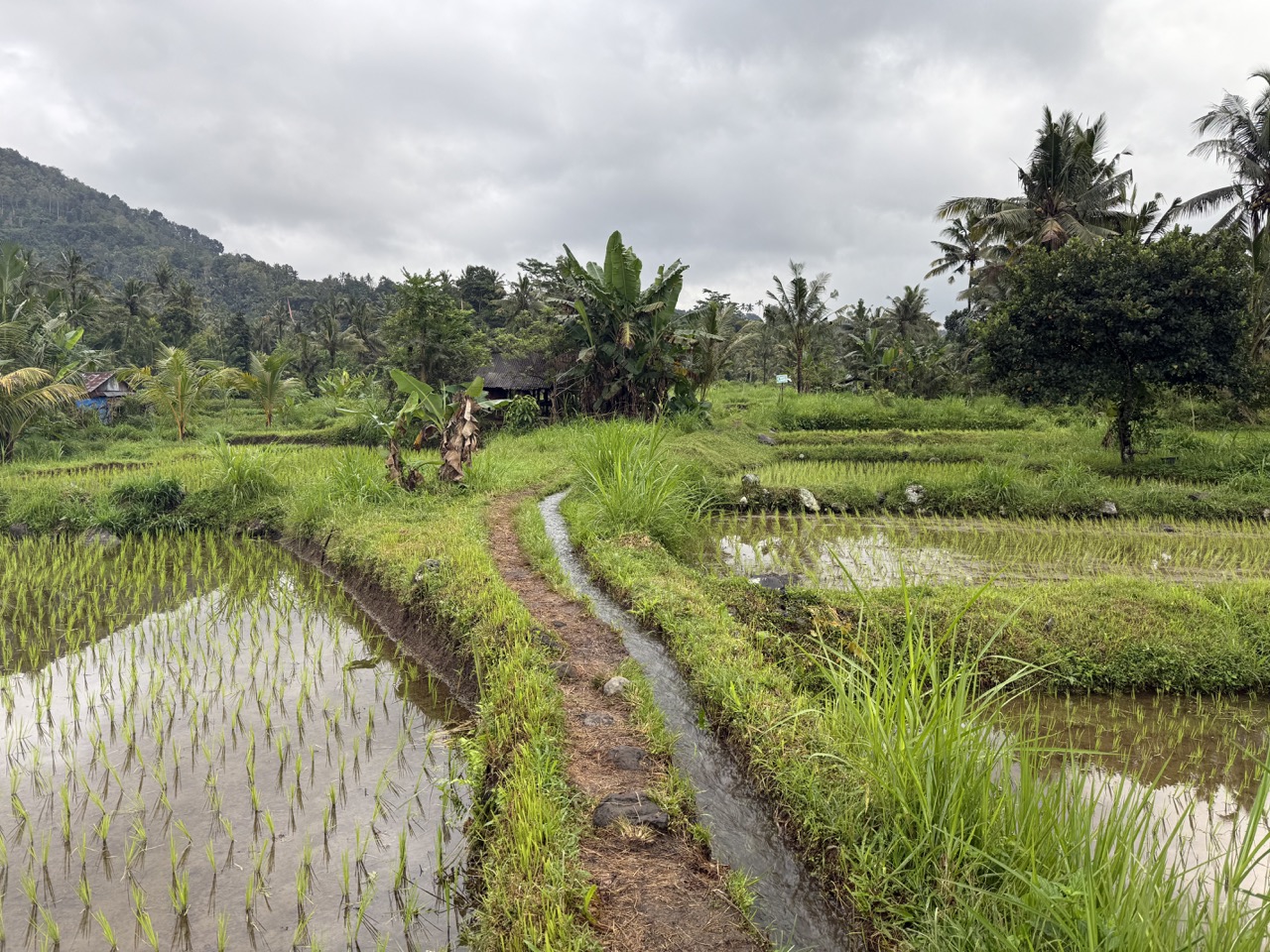
Everyone visits Tegallalang, but Bali's most spectacular rice terraces are spread across the island. This guide covers the best — from UNESCO-listed Jatiluwih to the peaceful fields of Sidemen — with tips on timing and photography.
Why Bali's Rice Terraces Are UNESCO-Recognized
In 2012, UNESCO inscribed Bali's subak system as a World Heritage Cultural Landscape — not just for the beauty of the terraces, but for the ancient cooperative water management system behind them. The subak dates back to the 9th century and is a democratic system where rice farming communities share water from volcanic lakes and springs through an intricate network of canals, tunnels, and weirs. Each subak (there are over 1,200 across Bali) operates as a cooperative, with farmers collectively deciding planting schedules, water distribution, and harvest timing through temple-based meetings. This system produces the stunning carved landscapes that visitors photograph, but it's the social and spiritual structure underneath that earned the UNESCO recognition. Every subak is connected to a water temple, and ceremonies mark each stage of the rice growing cycle — planting, growth, harvest, and fallow. Understanding this context transforms a rice terrace visit from simple sightseeing into an appreciation of a living cultural tradition that has sustained Bali for over a thousand years.
Tegallalang: Famous but Crowded — How to Visit Smart
Tegallalang, about 20 minutes north of Ubud's center, is the rice terrace that appears on every Bali Instagram feed. The terraces here are genuinely impressive — steep, cascading paddies carved into a deep river valley, with coconut palms rising above the green. The problem is that Tegallalang's fame has transformed the experience. On a typical mid-morning, the main viewpoints are packed with tourists, every path has someone selling drinks or demanding a photo fee, and the swinging platforms and artificial nests installed for social media photos dominate the landscape. That said, Tegallalang can still be enjoyable with the right approach. Arrive before 8 AM, when the tour buses haven't arrived and the morning light casts long shadows across the paddies. Walk past the main entrance and follow the paths deeper into the terraces — the crowds thin dramatically within 10 minutes. Skip the swing platforms. The lower terraces near the river are the most photogenic and the least visited. Budget about 60 to 90 minutes for a proper visit.
Jatiluwih: The Largest and Most Spectacular
If you see only one rice terrace in Bali, many locals would argue it should be Jatiluwih, not Tegallalang. Located in the highlands of the Tabanan regency, about 90 minutes northwest of Ubud, Jatiluwih spans over 600 hectares of terraced paddies cascading down gentle volcanic slopes with Mount Batukaru rising in the background. This is the centerpiece of the UNESCO subak recognition and feels completely different from Tegallalang's tourist infrastructure. Walking paths wind through the terraces for several kilometers, passing through working farms where you'll see farmers planting, weeding, or harvesting depending on the season. The scale is breathtaking — endless green terraces stretching to the horizon, with barely another tourist in sight. There's a small entrance fee of around 40,000 IDR, and the site offers walking routes of varying lengths (1 to 3 hours). Bring sun protection, as there's little shade. The drive to Jatiluwih passes through beautiful highland scenery, and a local driver can combine the visit with Batukaru Temple and the Tanah Lot sunset.
Want help planning based on this guide? Message Dek Rut on WhatsApp for personalized recommendations.
Message Dek RutSidemen: The Peaceful Alternative
The Sidemen valley in East Bali offers what may be the most beautiful rice terrace scenery on the island — and remains remarkably untouched by mass tourism. This wide, gently sloping valley sits below the towering silhouette of Mount Agung, Bali's holiest volcano, and the terraces here are broader and more pastoral than the dramatic carvings of Tegallalang or Jatiluwih. What makes Sidemen special is the feeling of immersion. Small guesthouses and homestays perch above the paddies, and you can walk through the rice fields on narrow paths between plots, with nothing between you and the working landscape. Farmers here are accustomed to visitors but not besieged by them — you're more likely to receive a genuine wave and a "hello" than a sales pitch. The light in Sidemen is particularly beautiful at sunrise, when Mount Agung casts its shadow across the valley and mist clings to the paddies. Sidemen is about 1.5 hours east of Ubud and works perfectly as part of an East Bali day trip or a quiet overnight stay away from the tourist centers.
The Campuhan Ridge Walk
Technically not a rice terrace, the Campuhan Ridge Walk deserves mention as Ubud's most accessible introduction to Bali's agricultural landscape. This narrow ridge path runs along the spine of a hill between two river valleys on the western edge of Ubud, with tall grass and coconut palms on either side and distant rice paddies visible in the valleys below. The walk is flat, paved, and only about 2 kilometers long, making it suitable for all fitness levels. The experience is best at sunrise, when the grass catches golden light and the air is still cool. Start at the small bridge near the Ibah luxury hotel on Jalan Raya Campuhan and follow the path uphill. The walk ends near the Karsa Kafe, a lovely spot for breakfast with views over the paddies. Because Campuhan is within walking distance of central Ubud, it requires no transport and makes a perfect early-morning activity before a full day of sightseeing. It's not dramatic the way Jatiluwih or Sidemen are, but as a quick, peaceful escape from Ubud's busy center, it delivers consistently.
Best Time to Visit: Green Season vs Harvest
Bali rice paddies go through distinct visual phases, and the time of your visit dramatically affects what you'll see. The planting and early growth stage (roughly 2 to 6 weeks after planting) produces the vivid, electric green that dominates postcard images. The mature stage (around 3 to 4 months after planting) turns the terraces a golden yellow as the grain ripens. After harvest, paddies are brown and flooded, which has its own mirror-like beauty but doesn't photograph as dramatically. Because different subak communities plant on different schedules, you can usually find green terraces somewhere on the island at any time of year. However, the best chance of seeing peak green across multiple sites is during the wet season months of November through March. Your driver can check current conditions with local contacts — a quick phone call to a friend in Jatiluwih or Sidemen can confirm whether the terraces are green, golden, or harvested, which helps you prioritize your itinerary on any given day.
Want help planning based on this guide? Message Dek Rut on WhatsApp for personalized recommendations.
Message Dek RutPhotography Tips for Rice Terraces
The best rice terrace photos share a few common elements. First, the golden hours — the hour after sunrise and the hour before sunset — transform flat green fields into textured landscapes full of shadow and depth. Harsh midday sun washes out the green and flattens the terraces visually. Second, elevation matters: find a viewpoint that lets you look down and across the terraces, which emphasizes the layered pattern. Tegallalang's valley shape makes this easy; at Jatiluwih, the walking paths offer multiple elevated viewpoints. Third, include a human element for scale — a farmer working in a distant paddy, a traveler walking a path through the green. This turns a landscape shot into a story. For Sidemen specifically, frame the terraces with Mount Agung in the background for maximum drama — this requires a clear morning, which is more likely in the dry season (April to October). A polarizing filter (or the equivalent phone camera setting) cuts glare from flooded paddies and deepens the green. Most importantly, put your camera down occasionally and simply absorb the view — the terraces have been here for centuries and deserve unhurried appreciation.
Need Help Planning Your Bali Trip?
Send me a message and I'll help design your perfect itinerary based on your interests and schedule.
Chat on WhatsAppRelated Tours
Related Services
Custom Tours
Every traveler is unique, and so should be your Bali experience. Tell me your interests, time, and budget, and I'll design a completely custom itinerary just for you. Whether you're seeking spiritual temples, adventure activities, cultural immersion, or hidden natural wonders — I'll craft the perfect journey.